
Welcome to Insights! At ImagineX, knowledge is power—and it’s even better when shared.

ImagineX Ranked #7 on Consulting Magazine's 2026 Best Firms to Work For
ImagineX has been named one of Consulting Magazine's 2026 Best Firms to Work For, ranking #7 among Small Firms nationwide. This marks the ninth consecutive year ImagineX has earned this recognition — a reflection of the culture, people, and commitment that define the company.
ImagineX Named to 2026 Inc. 5000 List of America’s Fastest-Growing Private Companies
ImagineX is on the 2026 Inc. 5000 — our fourth time on the list — with a 52% CAGR and 4× revenue growth since 2021. Read on to hear from our CEO and COO on what's driving it.
ImagineX Acquires Payteros to Strengthen Digital Transformation Capabilities
ImagineX has acquired Payteros, expanding its capabilities to help enterprise clients modernize, simplify, and scale digital operations. The acquisition combines ImagineX's expertise in AI, strategy, design, and engineering with Payteros' deep digital transformation capabilities — together accelerating innovation for clients across Financial Services, Retail & Hospitality, Energy & Infrastructure, and beyond.

When Your Enterprise Customer Runs SAP, Time to Revenue Is on the Line
Winning an enterprise payment deal is momentum. But in large SAP environments, revenue does not start when the contract is signed -- it starts when transactions begin flowing through the ERP. The integration strategy inside SAP is what determines how fast that happens.

How AI Is Changing Enterprise Payment Operations
AI is showing up inside enterprise payment platforms -- not as a replacement for finance teams, but as a layer that reduces the friction those teams have learned to live with. The impact tends to land in three places: routing decisions, reconciliation, and visibility into what is actually happening. But it only works when it connects properly to the ERP.

What Stablecoins Mean for Enterprise Finance Systems
The conversation about stablecoins in enterprise finance rarely stalls on the technology. It stalls on what happens after the payment moves -- posting, reconciliation, exceptions, and audit. Understanding what stablecoins actually require from a finance organization is a better starting point than debating whether they will succeed.

Real-Time Payments Still Need a Back Office That Can Keep Up
The payment rail can be instant. The finance process behind it usually is not. Real-time payments solve the speed problem -- but enterprise teams that have not prepared the back office often discover a faster path into a slower exception queue.

Agentic Payments Need Guardrails Before They Need More Autonomy
AI agents are beginning to move beyond recommendations -- they are initiating, managing, and executing payments with delegated authority. The promise is real. But enterprise finance teams will not adopt agentic payments because the technology works. They will adopt them when they can prove it works within the company's rules.

ERP Modernization Solved a Lot of Problems. Payments Were Not One of Them.
Most organizations have invested heavily in ERP modernization -- and the results speak for themselves. But one critical financial process consistently gets left behind: payments. Here's why that gap exists, why it matters more than ever, and what closing it actually looks like in practice.

Digital XTRAS #19: Building Rel-AI-tionships
In this episode, Travis sits down with Don Wedington to discuss how relationships are the key to sales, even in our new AI world.

Governance Across the Stack: Securing the Enterprise AI Framework
Secure your AI tools with cross-cutting governance. Learn how to manage access, runtime security, and compliance across your Enterprise AI Framework.

The Deep End: Enterprise Value Streams and Developer Platforms
Transform your business with mission-critical AI. Discover how engineers use multi-agent value streams and developer platforms to scale.

The Technical Build: Agentic Workflows and IT Applications
Discover what happens when AI workflows hit the no-code ceiling. Learn how technical teams build complex agentic workflows and IT-grade applications.
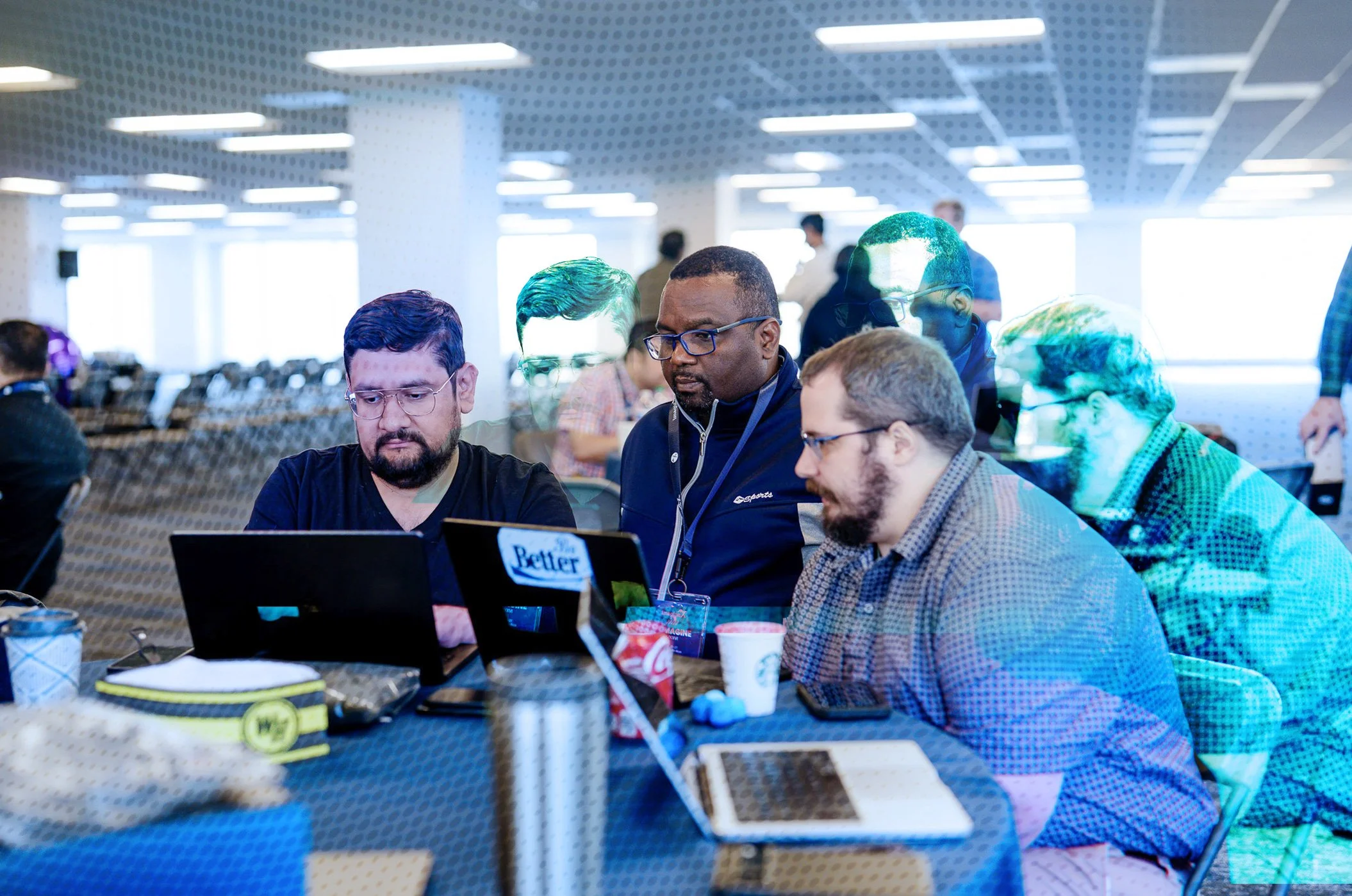
When Business Users Build Their Own AI
Empower your non-technical teams to build their own AI workflows and citizen apps. Learn how to eliminate IT bottlenecks safely with the AI Framework.

AI Tools Every Employee Can Use Today
Explore the 'No Build' layer of the Enterprise AI Framework. Learn how Knowledge Assistants and Agentic Desktops deliver immediate value to employees.

The Missing Piece: Why Every Enterprise Needs an AI Exchange
Solve AI tool sprawl with an Enterprise AI Exchange. Learn how to create a unified, discoverable portal for employees to find and rate AI capabilities.

The Enterprise AI Framework: A Capability Stack for Enterprise AI Enablement
Overcome AI tool sprawl with the Enterprise AI Framework. Learn how to structure your AI strategy across four capability layers with centralized governance.

The Enterprise AI Framework Blog Series: Your Guide to AI Enablement
Move from scattered AI experiments to a governed, enterprise-wide platform. Read our 7-part series on building an AI Framework that empowers users and secures your data.

AI Made Me 10x Faster—Here's What I Had to Change
After years of experience across the software engineering spectrum, I saw firsthand how AI tools can boost code output by ten-fold—but only if you rethink how you work. AI doesn’t replace human expertise; it shifts our role from writing every line of code to defining requirements, guiding AI, and rigorously reviewing results. To truly benefit from this acceleration, teams must upgrade not just tools but their entire development systems—improving testing environments, CI/CD processes, communication, and quality checks—so speed doesn’t come at the cost of stability.

Optimizing Agentic Task Predictability
AI works best when it’s predictable. This post explores how breaking complex tasks into clear phases—with checkpoints for review—turns AI from a black box into a reliable collaborator. If you want agentic workflows you can actually trust, it starts with how you structure the work.